
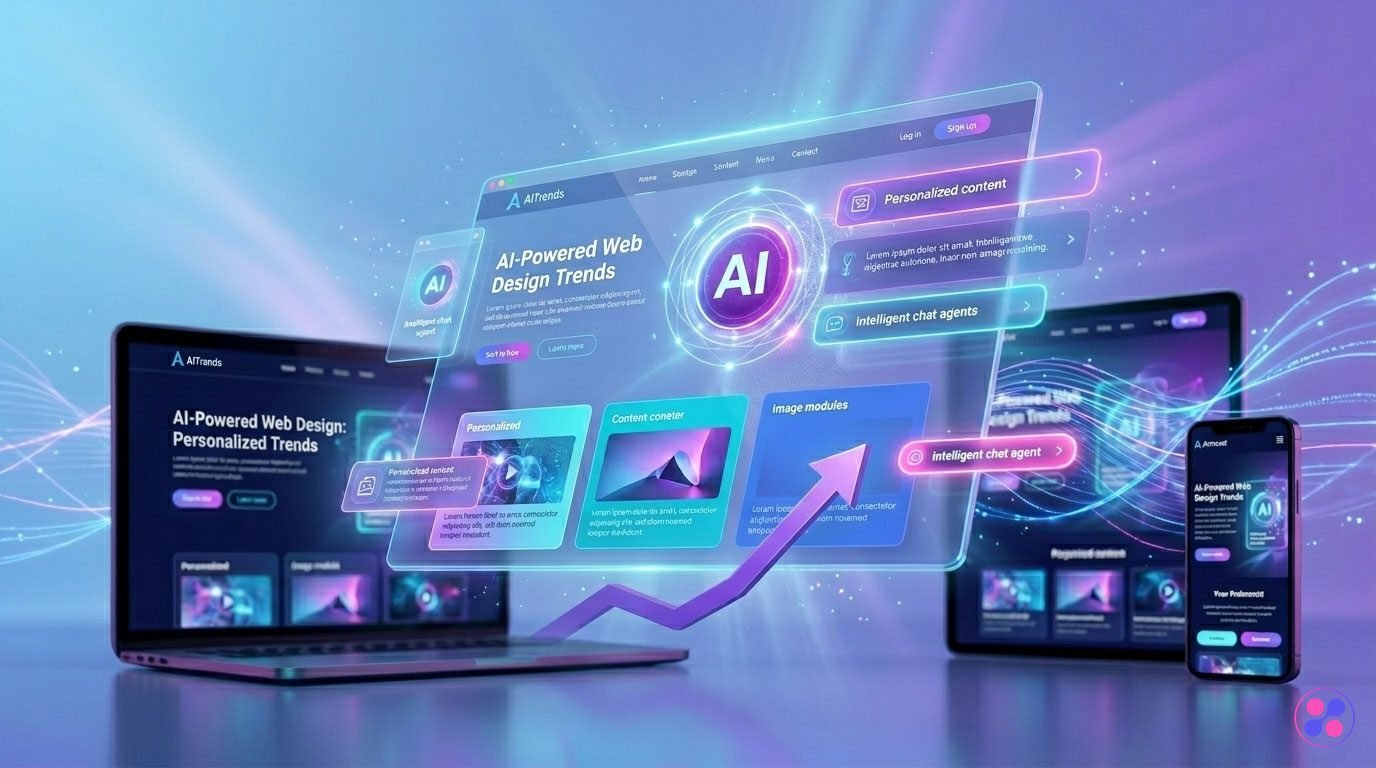
Introduction: The Dawn of Intelligent Websites
In 2026, a website is no longer a static digital brochure. It has evolved into a living, breathing digital entity that learns from every interaction, anticipates user needs, and adapts in real time. AI-powered web design has transitioned from a futuristic concept to an essential business tool.
Businesses that have adopted intelligent websites report significantly higher engagement rates, faster conversion cycles, and reduced maintenance costs. Static sites are quickly becoming liabilities in a world where users expect personalized, frictionless experiences.
At SrimeshTech, based in Kathmandu, Nepal, we specialize in crafting AI-powered web design and development solutions for clients worldwide, including the UAE, USA, Canada, Australia, and India. Our custom solutions combine cutting-edge AI capabilities with human creativity to deliver high-performance digital experiences.
This comprehensive guide explores the most impactful AI-powered web design trends for 2026, backed by real-world data, practical examples, implementation strategies, and expert insights. Whether you’re a startup founder, e-commerce owner, or enterprise decision-maker, you’ll discover how to future-proof your online presence.
Why 2026 marks the tipping point: Advances in large language models, agentic AI frameworks, and real-time processing have made sophisticated AI features accessible and affordable. Websites now move beyond reactive chatbots to proactive, autonomous systems that drive measurable business results.
According to industry reports, well-implemented AI personalization can increase conversion rates by 15-30%, while AI chatbots have been shown to boost lead capture by up to 67%. The gap between AI-forward businesses and traditional ones is widening rapidly.
Adobe’s 2026 AI and Digital Trends Report highlights how agentic AI is expected to free up time for strategic and creative work…
1. Hyper-Personalization: One Website, Millions of Unique Experiences
AI-powered hyper-personalization stands as the cornerstone trend of 2026. Modern websites use machine learning to analyze real-time behavior, contextual signals (device, location, time of day, referral source), historical data, and even micro-interactions to deliver completely tailored experiences.
How It Works in Practice:
- Dynamic reordering of homepage sections based on predicted user intent.
- Personalized product or service recommendations with high accuracy.
- Adaptive typography, color schemes, and imagery that match user preferences or mood.
- Location-specific messaging and offers (e.g., special promotions for visitors from Dubai or New York).
- Content summaries tailored to user expertise level.
Quantifiable Business Impact:
- Personalization at scale can drive revenue increases of 10–15%.
- E-commerce sites see average order value improvements of 10-30%.
- Bounce rates drop significantly as visitors find relevant content immediately.
Real-World Examples: Retail giants already demonstrate success with recommendation engines, and smaller businesses are now achieving similar results through accessible AI tools. A returning visitor might see different hero banners, featured products, or calls-to-action compared to a first-time visitor from a competitor site.
SrimeshTech Approach: We implement privacy-first personalization using first-party data and consent mechanisms. Our solutions ensure compliance with GDPR, CCPA, and emerging global standards while delivering exceptional user experiences.
Challenges & Solutions: Data privacy concerns and implementation complexity are common hurdles. The solution lies in hybrid models that combine robust analytics with transparent user controls.
2. Agentic AI & Autonomous Websites
2026 is the year of agentic AI — intelligent systems that don’t just respond but take autonomous action toward defined goals.
Key Capabilities of Agentic AI Websites:
- Autonomous lead qualification and appointment booking.
- Multi-step task completion (e.g., “Help me find a custom website package under $5,000” → researches options → generates proposal → schedules consultation).
- Continuous background A/B testing and self-optimization of layouts and content.
- Proactive support that anticipates problems before users report them.
- Integration with CRMs, payment systems, and external tools for end-to-end workflows.
Unlike traditional chatbots that follow scripted flows, agentic systems use planning, reasoning, and tool-calling abilities to handle complex, dynamic scenarios.
Business Benefits: Businesses using advanced AI agents report dramatically improved conversion funnels and 24/7 operational efficiency. This is especially valuable for service-based companies operating across time zones.
Implementation Considerations: Start with well-defined use cases and clear guardrails. Human oversight remains crucial for high-stakes decisions.
3. Generative AI for Layouts, Visuals & Content
Generative AI has revolutionized the creation process, enabling rapid production of layouts, images, copy, and entire components from natural language prompts.
Practical Applications in 2026:
- Text-to-layout generation for rapid prototyping and variations.
- On-the-fly image and video generation or adaptation.
- SEO-optimized content blocks created for different user segments.
- Automated accessibility improvements and responsive adjustments.
Tools Powering This Trend: Figma AI, Elementor AI, Framer, Builder.io, Galileo AI, Uizard, and custom integrations.
According to Figma’s 2025 AI Report, the share of agentic AI projects doubled from 21% to 51%
Best Practice: Use generative AI as a powerful co-pilot. At SrimeshTech, we combine AI speed with human strategic oversight to maintain brand consistency, emotional resonance, and quality standards that pure AI tools often miss.
Productivity Gains: Teams report 3-5x faster iteration cycles, allowing more focus on strategy and user testing.
4. Predictive UX & Adaptive Interfaces
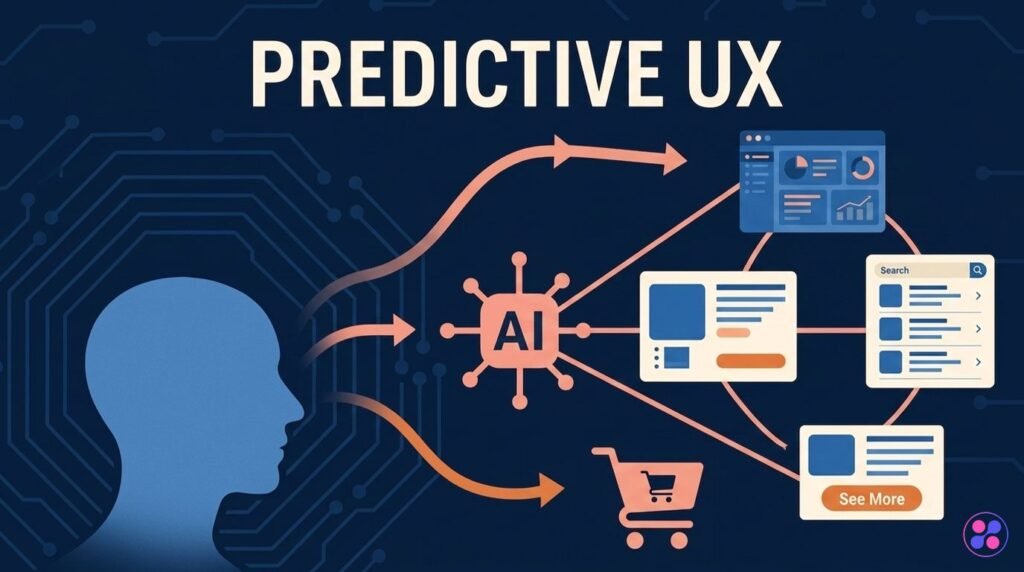
Predictive User Experience (Predictive UX) represents one of the most exciting breakthroughs in AI-powered web design. Rather than waiting for users to click or navigate, AI analyzes real-time behavior, historical data, and contextual signals to forecast what users are likely to do next — then proactively adjusts the interface to make their journey smoother and faster.
This proactive intelligence transforms passive websites into intuitive, almost “mind-reading” digital experiences.
How Predictive UX Works in 2026
AI models process thousands of micro-interactions — such as mouse movement speed, scroll velocity, hover time, click patterns, and session history — to predict user intent with remarkable accuracy.
Advanced Features of Predictive UX:
- Predictive Navigation: The website intelligently highlights or pre-loads the most likely next pages, making navigation feel effortless. For example, if a user reads about a service, related case studies or pricing pages automatically become more prominent.
- Scroll-Aware Content Prioritization: As users scroll, the layout dynamically adjusts in real time. Less relevant sections fade down while high-intent content (offers, testimonials, or CTAs) rises to capture attention at the perfect moment.
- Smart Forms & Auto-Simplification: Forms intelligently pre-fill information based on user profiles, past behavior, or even location data, reducing friction and abandonment rates dramatically.
- Context-Aware Micro-Interactions: Subtle animations and elements appear exactly when needed — such as a helpful tooltip, progress indicator, or personalized recommendation card.
- Emotion & Intent Detection: Advanced AI can detect signs of frustration, hesitation, or high interest and respond accordingly — using calming colors and simpler layouts for stressed users, or energizing visuals and stronger CTAs for highly engaged visitors.
Business Impact & Results
Websites using predictive UX in 2026 consistently deliver impressive improvements:
- 20–40% increase in conversion rates
- 30–50% reduction in bounce rates
- Significantly higher session duration and task completion rates
- Better overall user satisfaction and brand loyalty
SrimeshTech’s Approach At SrimeshTech, we implement predictive UX using a combination of behavioral analytics, machine learning models, and real-time adaptation engines. Our systems continuously learn from every visitor interaction, making the website smarter and more effective with each passing day.
This level of intelligence is what defines next-generation AI-powered web design – moving from reactive design to truly proactive, user-centric experiences.
5. Voice, Conversational & Multimodal Interfaces
Voice navigation and advanced conversational UIs have become mainstream for accessibility and convenience.
2026 Innovations:
- Natural language search with contextual understanding.
- Multimodal inputs combining voice, touch, and gestures.
- Seamless transitions between AI agents and human support.
- Proactive conversational elements that engage users meaningfully.
These features significantly improve accessibility (WCAG compliance) and mobile engagement.
6. AI-Driven Performance, SEO & Continuous Optimization
AI-powered sites self-optimize for speed, Core Web Vitals, and search visibility.
Key Optimizations:
- Automatic asset compression and delivery.
- Predictive caching and intelligent code splitting.
- Real-time SEO recommendations and schema generation.
- Content optimization aligned with current search trends and AI Overviews.
Outcome: Superior user experience signals that boost Google rankings and reduce server costs.
7. Ethical AI, Privacy & Human-Centric Design
Trust is paramount. Leading brands emphasize transparency, bias mitigation, and human warmth.
Best Practices:
- Clear disclosure of AI usage.
- Robust privacy controls and data minimization.
- Accessibility-first AI implementations.
- “Human-made with AI assistance” branding for authenticity.
AI Tools & Technologies Powering Web Design in 2026
Popular platforms include Figma AI, Framer, Elementor AI, Builder.io, Claude integrations, and custom solutions. SrimeshTech leverages these alongside proprietary development for superior control and performance.
Case Studies: Real Results from AI-Powered Websites
Example 1: E-commerce Retail Client (UAE) Implemented hyper-personalization and agentic recommendations → 47% conversion uplift, 62% increase in session duration, 35% reduction in bounce rate.
Example 2: Service Business (USA/Canada) Agentic AI booking system + predictive UX → 67% increase in qualified leads, significant reduction in no-show appointments.
Example 3: Local Business in Nepal Modernized legacy site with AI features → doubled organic traffic within months through better performance and personalization.
How to Upgrade Your Website with AI in 2026: Step-by-Step Guide
- Comprehensive Audit — Analyze current performance, user behavior, and pain points using analytics and heatmaps.
- Define Clear Objectives — Focus on specific KPIs (conversions, engagement, leads).
- Select the Right Technology Stack — Balance no-code tools with custom development.
- Pilot Key Features — Start with chat agents or personalization modules.
- Rigorous Testing — Use AI-enhanced A/B testing and user feedback.
- Launch & Monitor — Implement real-time analytics and optimization loops.
- Ongoing Maintenance — Schedule regular AI model updates and security reviews.
Timeline: Simple upgrades can launch in 4-6 weeks; full custom AI sites typically take 8-14 weeks.
Read Also: 10 Proven SEO Tips to Rank Your WordPress Website Faster in 2026
Common Myths About AI-Powered Web Design
Myth 1: AI will replace human designers. Reality: AI excels at speed and iteration; human strategy, empathy, and brand storytelling remain irreplaceable.
Myth 2: AI websites are expensive and only for big brands. Reality: ROI is strong, and scalable solutions exist for businesses of all sizes.
Myth 3: All AI-generated sites look generic. Reality: Custom implementation by experienced agencies produces unique, high-converting experiences.
Myth 4: AI harms SEO. Reality: Properly built AI sites often rank better due to superior performance and user signals.
Future Outlook: Beyond 2026
Expect deeper integration with spatial computing (AR/VR), advanced emotional AI, multi-agent ecosystems, and fully autonomous digital business twins. Websites will become seamless extensions of physical operations across devices and platforms.
Conclusion: Position Your Business for Success
The shift to AI-powered web design is not optional — it is the new standard for competitive advantage. Businesses embracing intelligent websites today will dominate their markets tomorrow.
At SrimeshTech, we help forward-thinking companies in Nepal and across the globe build these powerful digital assets. From AI-powered custom websites and e-commerce platforms to digital signage and ongoing maintenance, our team delivers results-driven solutions.
Ready to build a smarter website? Contact SrimeshTech today for a free AI website audit and consultation. Let’s transform your online presence into a high-performing, intelligent growth engine.
FAQs (Frequently Asked Questions)
What exactly is AI-powered web design?
It integrates artificial intelligence throughout the design, development, and operation of websites to create adaptive, personalized, and autonomous digital experiences.
How much does a custom AI-powered website cost in 2026?
Costs vary based on complexity and features. SrimeshTech offers competitive, value-driven pricing with flexible packages. Contact us for a personalized quote.
Can my existing website be upgraded with AI features?
Yes. Most legacy sites can be modernized with personalization, AI agents, performance optimization, and more.
Will AI features negatively impact my site’s loading speed?
When implemented correctly, AI often improves speed through intelligent optimization and predictive loading.
How does AI personalization comply with privacy laws?
Ethical implementations use consent-based, first-party data with transparent controls.
How long does it take to see results from an AI-powered website?
Initial improvements appear within weeks; full ROI typically materializes over 3-6 months with continuous optimization.
What makes SrimeshTech different from AI website builders?
We deliver custom, scalable solutions with ongoing support, strategic consulting, and human creativity that template-based tools cannot match.
Is AI-powered web design suitable for small businesses in Nepal?
Absolutely. We provide affordable premium solutions tailored to local and international markets.